
Commercial High-Speed
Door Repair Services
Mt. Zion Material Handling repairs high-speed doors at warehouses, distribution centers, manufacturing plants and other commercial and industrial facilities throughout Pennsylvania, New Jersey, New York, Delaware and Maryland.
A high-speed door may stop opening or closing, get stuck partway, move slower than usual or fail to reset after an impact. Other service calls involve curtains knocked out of the guides, torn fabric, sensors or photo eyes, controls that don’t respond and problems with the motor or drive system.
Our in-house, factory-trained technicians troubleshoot the cause of the failure and repair high-speed door systems used in busy loading, production and material-handling areas.
Focus Areas
Focus Areas
- High-Speed Door Repair
- Doors That Won’t Open or Close
- Curtain & Guide Repair
- Breakaway & Reset Problems
- Sensors & Photo Eyes
- Controls & Operators
- Motors & Drive Systems
- Forklift & Impact Damage
High-Speed Door Repair for Commercial & Industrial Facilities
High-speed and high-performance doors are often installed in busy openings where people, forklifts and material move throughout the day. Warehouses, manufacturing plants and distribution centers may use them between work areas, at loading points or anywhere a doorway needs to open and close frequently.
When a door stops cycling the way it should, our technicians can troubleshoot the system and determine what is interfering with its operation. Repairs may involve the curtain and guides, controls, sensors, operator or other components tied to the door’s movement. Mt. Zion also services other commercial overhead doors used throughout industrial facilities.

Common High-Speed Door Problems We Repair
Repeated cycling, contact with forklifts or carts and wear can all affect how a high-speed door operates. You may notice a door that stops moving, comes out of the guides, reverses unexpectedly or no longer responds to its controls.
Below are some of the issues our technicians are called to troubleshoot and repair.
High-Speed Door Won’t Open or Close
Problems with sensors, safety devices, controls or the operator can interrupt a normal door cycle. Our technicians trace the issue through the system to identify what is keeping the door from moving or completing its travel.
Curtain Knocked Out of the Guides
Forklift contact or another impact can pull the curtain from its guides and keep the door from cycling properly. Depending on the door design and the extent of the damage, the curtain may be reset rather than replaced.
High-Speed Door Won’t Reset After an Impact
Many high-speed doors use breakaway or self-repairing features designed to limit damage when the curtain is struck. If the door doesn’t return to normal operation afterward, the guides, bottom bar, sensors or reset system may need attention before the opening can be put back into service.
Torn or Damaged Door Curtain
Small tears, punctures and damaged edges don’t always mean the entire curtain needs to be replaced. The location and extent of the damage, along with how the curtain travels through the guides, will determine whether repair is practical or a replacement curtain is the better option.
Slow or Uneven Door Movement
Changes in speed, hesitation or jerky movement can point to wear or a problem within the drive system, guides or controls. Catching the change early can keep a minor operating issue from turning into a complete shutdown.
Sensor & Photo-Eye Problems
Dust, misalignment, physical damage or a failed sensor can interrupt the signal a door relies on to cycle safely. Photo eyes and other safety sensors should be checked along with their wiring and connections when the door reverses unexpectedly, refuses to close or responds inconsistently.
Controls Aren’t Responding
Push buttons, pull cords, remotes and other activation controls can stop triggering the door as expected. Testing the controls and their connections helps narrow down whether the issue is at the activation point or elsewhere in the door system.
Motor, Operator & Drive Problems
Unusual noise, inconsistent movement or a door that stops during travel can point to trouble with the motor, operator or drive components. A technician can isolate the source of the problem and determine which parts need repair or replacement.
Fabric vs. Rigid High-Speed Door Repair
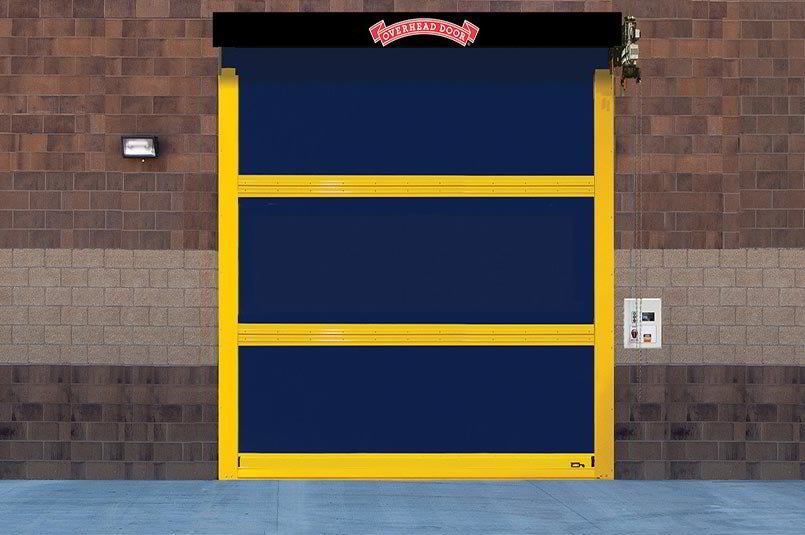
A forklift hit can leave a fabric curtain outside its guides without ruining the entire door. Rigid and spiral doors tend to show impact differently, with damage around the panels, slats or the path they travel.
That difference matters when we’re looking at what happened and what it will take to get the opening working again.
What Does a Technician Check During a High-Speed Door Repair?
The first checks usually depend on what the door is doing when you call. A door that keeps reversing points us in a different direction than one that was struck and came out of its guides.
From there, what we find determines where we look next. Controls or sensors may be involved, while another call may lead us to the curtain, guides or drive.
When Should a High-Speed Door Be Taken Out of Service?
If the door is moving unpredictably, has visible damage or won’t stay in its guides, continuing to cycle it can make the problem worse. The same applies when a safety device isn’t working as expected.
In those situations, leave the door out of service until it can be inspected and the problem corrected.
Emergency High-Speed Door Repair
A high-speed door stuck open can leave a busy opening exposed, while one stuck closed can block traffic between work areas or at the loading dock. When the door failure can’t wait for a routine service visit, Mt. Zion provides 24/7 emergency repair throughout its service area.
For high-speed doors located at the loading dock, our 24/7 emergency loading dock repair service is also available for urgent dock-related problems.
High-Speed Door Repair vs. Replacement
Not every damaged high-speed door needs replacement. A torn curtain, damaged sensor or failed operator may be repairable while the rest of the door is still in good condition.
Replacement becomes worth considering when damage involves several parts of the door, repairs are becoming frequent or the existing system no longer makes sense for the amount of use the opening gets.
Preventative Maintenance for High-Speed Doors
A high-speed door can cycle hundreds of times during a busy shift. That kind of high-cycle use eventually shows up somewhere, whether it’s a curtain starting to track differently, a sensor getting knocked out of position or a door that just doesn’t move like it used to.
Regular service lets us catch those changes while the door is still running, instead of waiting for the opening to go down.
High-Speed Door Brands We Service
Mt. Zion services and repairs high-speed doors from a wide range of manufacturers. We are also an authorized dealer for the brands listed below.
BMP / DynamicRoll® • Rytec • Hörmann • Dynaco • EFAFLEX • TNR • ASSA ABLOY / Albany • CornellCookson • ASI Doors • Nergeco • Maviflex • Overhead Door / RapidFlex • Jamison
Don’t see your high-speed door manufacturer listed? Give us a call with the brand and model. Our service capabilities are not limited to the manufacturers shown above.
Why Choose Mt. Zion for High-Speed Door Repair?
High-speed doors aren’t an occasional service call for a subcontracted crew. Mt. Zion uses its own in-house technicians, with factory training and continued manufacturer training for the commercial and industrial systems they work on.
Facilities across Pennsylvania, New Jersey, New York, Delaware and Maryland have relied on Mt. Zion for more than 20 years. Repairs also come with a 12-month warranty on parts and labor.
High-Speed Door Repair FAQs
High-speed door problems can look similar even when the cause is different. Here are answers to a few of the questions we hear about repairs, resets, curtain damage and ongoing service.
Why Won’t My High-Speed Door Open or Close?
A sensor or safety device can interrupt the door cycle even when nothing appears damaged. Controls, the operator or the drive may also be involved. If the door has power but still won’t move normally, repeatedly cycling or resetting it can make troubleshooting harder.
Why Does My High-Speed Door Keep Reversing?
Check the doorway first for anything blocking the sensors or photo eyes. If the opening is clear and the door still reverses, a sensor may be dirty, damaged or out of alignment. Problems with the safety edge or controls can cause similar behavior.
Can a High-Speed Door Curtain Be Put Back in the Guides?
Yes. Many fabric high-speed doors are designed to release from the guides after an impact to prevent more serious damage. If the curtain and guides are still usable, the door may be reset and returned to operation without replacing the curtain.
Why Won’t My High-Speed Door Reset After an Impact?
The curtain may not have returned to the guides correctly, or the breakaway system may not have reset as intended. Check the opening for visible damage or anything blocking the door’s path. If it still won’t reset, the door should be inspected before it’s put back into regular use.
Can a Torn High-Speed Door Curtain Be Repaired?
Yes, in many cases. A small tear or localized area of damage may be repairable without replacing the entire curtain. Larger tears, damage along the edges or problems that affect how the curtain travels through the guides may call for replacement.
What Causes a High-Speed Door to Open or Close Slowly?
A change in speed can come from the drive system, controls or resistance as the curtain moves through the guides. If the door is noticeably slower than it used to be, have it inspected to find the cause before the door stops cycling properly.
How Often Should a High-Speed Door Be Serviced?
No single service interval fits every high-speed door. How often the door cycles, where it’s installed and the conditions around the opening all matter. Doors running throughout the day may need attention more often than doors with lighter use.
Request High-Speed Door Repair Service
If a high-speed door is slowing down, damaged or no longer cycling properly, contact Mt. Zion to schedule service. Our in-house technicians provide high-speed door repair for commercial and industrial facilities throughout Pennsylvania, New Jersey, New York, Delaware and Maryland.
Call (570) 388-4001 or request service online to schedule high-speed door repair service.

Got Any Questions?
Connect with our Support team
Mt. Zion techs provide reliable, quick and satisfactory support for any customer queries or issues. Our aim is to be available whenever you need us. Reach out to us for further information using the below methods:
Request a Quote
Fill out the form below and inquire for product or service quote.