
Commercial Truck Restraint Repair Services
Mt. Zion Material Handling provides truck restraint repair for warehouses, distribution centers, manufacturing plants and other commercial and industrial facilities throughout Pennsylvania, New Jersey, New York, Delaware and Maryland. Our in-house, factory-trained technicians service truck and vehicle restraints that won’t engage or release, have damaged locking mechanisms, communication-light problems, control issues or other mechanical, electrical and hydraulic failures.
Truck restraints work alongside other loading dock equipment to keep trailers secured during loading and unloading. We service powered and manual restraint systems, including systems that integrate with communication lights and other dock controls.
Focus Areas
Focus Areas
- Truck & Vehicle Restraint Repair
- Restraints That Won’t Engage or Release
- Damaged Hooks & Locking Mechanisms
- Communication Lights & Controls
- Sensors & Interlock Problems
- Electrical, Hydraulic & Mechanical Repairs
- Trailer & Impact Damage
- 24/7 Emergency Service
Truck Restraint Repair for Commercial & Industrial Facilities
A failed truck restraint can put a loading position out of normal operation. It may stop securing the trailer, remain locked after loading is complete or show the wrong status at the control panel. In other cases, the first sign of trouble is a communication light that no longer changes as expected.
Our technicians trace the issue through the restraint and its related controls to determine where the failure begins. Because these systems can interact with other dock components, that broader experience helps when the cause isn’t obvious.
Mt. Zion also provides commercial loading dock repair for facilities dealing with leveler, door or other dock-related issues.
Common Truck Restraint Problems We Repair
Truck restraint trouble can show up in different ways during normal dock operation. The unit may fail to secure a trailer, remain engaged when it should release or display the wrong status through the communication system. How the restraint behaves helps narrow down where the failure is occurring and what needs attention.
Truck Restraint Won’t Engage
When a truck restraint won’t engage, the trailer may not be properly secured at the dock. The issue could involve the hook, locking mechanism, controls or feedback from a sensor.
How the restraint responds during an attempted engagement can help the technician pinpoint what needs attention.
Truck Restraint Won’t Release
A restraint that stays engaged after loading can prevent the trailer from leaving the dock. A jammed mechanism, control fault or damaged component may be keeping it locked in place.
Do not force the restraint free. The unit should be inspected to determine why it isn’t releasing properly.
Damaged Hook or Restraint Mechanism
Repeated trailer contact can take a toll on the hook and other moving parts within the restraint. A hard impact may also knock components out of position or affect how the mechanism travels.
The surrounding hardware and mounting points should be checked as part of the repair, especially when the unit has taken a significant hit.
Communication Lights Aren’t Working
Communication lights let dock personnel and drivers know the restraint’s status. If the signal doesn’t change as expected, the fault may not be with the light itself.
Checking the controls and wiring can show whether the problem is with the light or somewhere else in the communication system.
Control Panel & Sensor Problems
A restraint may appear mechanically intact even when the control panel is showing a problem. Sensor readings can also affect whether the system recognizes the restraint’s position.
Testing these points can narrow down the problem before parts are replaced unnecessarily.
Electrical, Hydraulic & Mechanical Problems
The components involved vary depending on the restraint design. Power issues can affect one system, while another may develop trouble within its hydraulic or mechanical components.
Watching the unit operate during a service call can give the technician a better idea of where to look.
Forklift, Trailer & Impact Damage
A hard hit at the dock can shift the restraint out of position. Even when everything looks intact from the outside, the mounting hardware may have taken some of the force.
After a significant impact, the unit should be inspected to confirm it can still secure the trailer properly.
Truck Restraint Components We Repair
A problem with one component does not always mean the entire restraint needs to be replaced. Depending on what the technician finds, the repair may involve:
- Hooks and locking mechanisms
- Sensors and position switches
- Control panels
- Communication lights
- Wiring and electrical components
- Hydraulic components
- Mounting hardware
- Moving assemblies and related hardware
Types of Truck & Vehicle Restraints We Service
Restraint design can vary based on how trailers are handled at each loading position. Our technicians work with several types commonly found in commercial and industrial facilities.
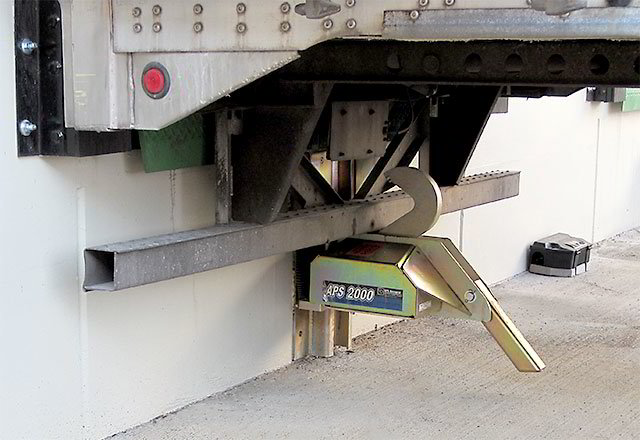
Hook-Style Vehicle Restraints
Hook-style restraints secure a trailer by capturing its rear impact guard. If the hook cannot fully engage, the trailer may not be properly secured at the dock.
Wear or damage inside the mechanism can interfere with the hook’s travel and keep it from locking into place.
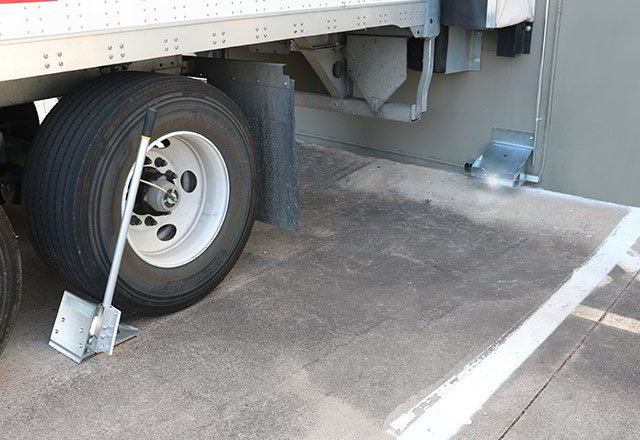
Wheel-Based Vehicle Restraints
Wheel-based restraints secure the trailer at the wheel rather than relying on the rear impact guard. Mt. Zion offers the VersaChock vehicle restraint, which can accommodate a wide range of trailers regardless of the condition or presence of an ICC bar.
Its wireless engagement design detects the wheel without requiring chock cabling on the drive. If the system stops engaging or detecting the trailer correctly, our technicians can diagnose the issue and make the necessary repair.
Powered & Manual Restraints
Powered models use a drive system to move the securing mechanism into place, while manual designs rely on activation at the dock. Wear, damage or a problem with the operating mechanism can prevent either type from securing the trailer properly.
Mt. Zion services both designs and can address problems with the components involved.
Truck Restraint Communication Lights, Controls & Interlocks
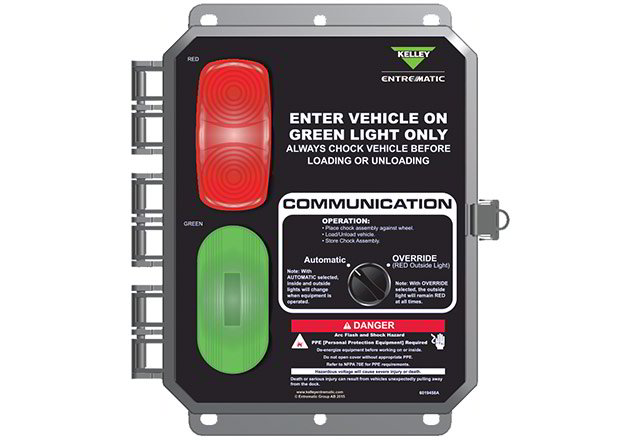
Clear communication between the dock and driver is an important part of the loading process. Interior and exterior lights indicate when the trailer is secured, while controls and interlocks coordinate other functions at the dock.
When those signals stop matching what is happening, the problem may extend beyond the lights themselves. A sensor, control component, wiring or the restraint itself could be involved.
When Should a Truck Restraint Be Taken Out of Service?
Take a dock position out of normal use when the restraint cannot reliably secure the trailer or its status cannot be confirmed. Visible damage, unexpected movement or a failed communication signal can also indicate that the system needs to be inspected.
Continuing to use a questionable restraint can increase the risk of trailer creep or an unexpected departure from the dock during loading. Keep the affected position out of service until the cause is identified and the restraint is operating properly.
24/7 Emergency Truck Restraint Repair
A restraint failure can become an urgent service issue when a trailer cannot be secured, released from the dock or its status verified. Impact damage that leaves the condition of the system unclear may also require immediate attention.
Mt. Zion provides 24/7 service for urgent restraint problems. For failures involving other equipment at the same dock position, see our 24/7 emergency loading dock repair services.
Truck Restraint Repair vs. Replacement
Not every restraint problem means the entire unit needs to be replaced. If the main assembly is still in good condition, a failed sensor, control component or worn mechanical part may be repairable.
Replacement becomes worth considering when there is significant structural damage, repeated breakdowns or an older system that no longer works well with the trailers using the dock. In those cases, Mt. Zion can evaluate the existing setup and determine whether continued repair still makes sense.
For facilities ready to replace an existing system, see our loading dock installation and replacement services.
Preventative Maintenance for Truck Restraints
A restraint can still work even as parts of the system begin to wear. Scheduled service gives the technician a chance to spot those issues before the unit becomes unreliable during loading.
Mt. Zion can include vehicle restraints as part of a broader preventative loading dock maintenance program. The technician documents any problems found during the visit, so the facility knows what needs attention.
Truck Restraint Brands We Service
Mt. Zion services truck and vehicle restraint systems from leading manufacturers found throughout commercial loading docks. These systems may also be referred to as trailer restraints or dock locks, depending on the manufacturer and facility.
Brands serviced include Kelley, Blue Giant, Rite-Hite, McGuire, Poweramp, Serco and others.
Why Choose Mt. Zion for Truck Restraint Repair?
Service is handled by our in-house, factory-trained technicians, not outsourced crews. Their experience includes dock controls, interlock systems and the equipment surrounding each loading position.
As an exclusive Kelley dealer with more than 20 years in the material handling industry, Mt. Zion brings established experience to every job. 24/7 emergency service is available, with repairs backed by a 12-month warranty on parts and labor.
Truck Restraint Repair FAQs
Truck restraint problems can raise questions about whether a dock can stay in use, what caused the failure and when service is needed. Below are answers to common questions about restraint operation and repair.
What Is the Difference Between a Truck Restraint, Vehicle Restraint and Dock Lock?
These terms are often used for systems designed to secure a trailer at the loading dock. Vehicle restraint is a broad industry term, while truck restraint, trailer restraint and dock lock are also commonly used depending on the manufacturer or facility.
The design may vary, but the purpose is the same: keeping the trailer secured during loading and unloading.
Why Won’t My Truck Restraint Engage?
A truck restraint may fail to engage because the securing mechanism cannot reach its normal position or the system is not receiving the signal needed to complete the cycle. Damage from trailer contact can also interfere with operation.
If the restraint will not engage, the dock position should be inspected before the unit is put back into service.
Why Won’t My Truck Restraint Release?
A restraint may stay engaged when the mechanism cannot return to its normal position or the system is not receiving the correct release signal. Damage from trailer movement can also prevent the unit from releasing properly.
If the trailer remains secured after the release procedure, inspect the restraint rather than forcing it open.
Why Are My Dock Restraint Communication Lights Not Working?
The problem may be with the light itself, but it can also come from the wiring, controls or a sensor that is not reporting the restraint’s position correctly.
If the lights do not match the actual status at the dock, the communication system should be checked before normal operation continues.
Can a Damaged Truck Restraint Be Repaired?
Yes. Many damaged truck restraints can be repaired if the main assembly and mounting points remain serviceable. The extent of the damage will determine whether individual components can be repaired or replaced.
If the damage is more extensive, replacement may be the better option.
How Often Should Truck Restraints Be Inspected or Serviced?
The right service schedule depends on the restraint, how often the dock is used and the manufacturer’s recommendations. High-traffic positions may need more frequent attention than docks with lighter use.
Routine inspections can also uncover wear or operational changes before the restraint becomes unreliable.
Can a Loading Dock Be Used if the Truck Restraint Isn’t Working?
No, not until you determine whether the trailer can be safely secured. A failed restraint means one of the dock’s primary methods of preventing trailer movement is unavailable.
The affected position should be evaluated before loading or unloading continues.
Do You Provide Truck Restraint Repair Throughout PA, NJ, NY, DE and MD?
Yes. Mt. Zion provides truck restraint repair for commercial and industrial facilities throughout Pennsylvania, New Jersey, New York, Delaware and Maryland.
Our technicians travel throughout the region for scheduled repairs and emergency service.
Request Truck Restraint Repair Service
Having trouble with a restraint at your loading dock? Mt. Zion provides scheduled repairs and 24/7 emergency service throughout Pennsylvania, New Jersey, New York, Delaware and Maryland.
When requesting service, let us know which dock position is affected, what the restraint is doing and whether a trailer is currently at the dock. This gives our team useful information before arriving at your facility.
Contact our team to schedule service or discuss what’s happening at your facility. Call (570) 388-4001 or request service online to schedule truck restraint repair for your facility.

Got Any Questions?
Connect with our Support team
Mt. Zion techs provide reliable, quick and satisfactory support for any customer queries or issues. Our aim is to be available whenever you need us. Reach out to us for further information using the below methods:
Request a Quote
Fill out the form below and inquire for product or service quote.